

Understanding Mineral Rights: How to Validate Your Asset’s True Worth
A mineral-rights range is more credible when a second reviewer can reconstruct it from the same asset scope, dated evidence, assumptions, units, and method.
Reviewed mineral-owner education
Browse practical articles about offers, ownership, royalties, inherited rights, and selling decisions.
Showing 217 through 240 of 344 published articles
Page 10 of 15
A mineral-rights range is more credible when a second reviewer can reconstruct it from the same asset scope, dated evidence, assumptions, units, and method.
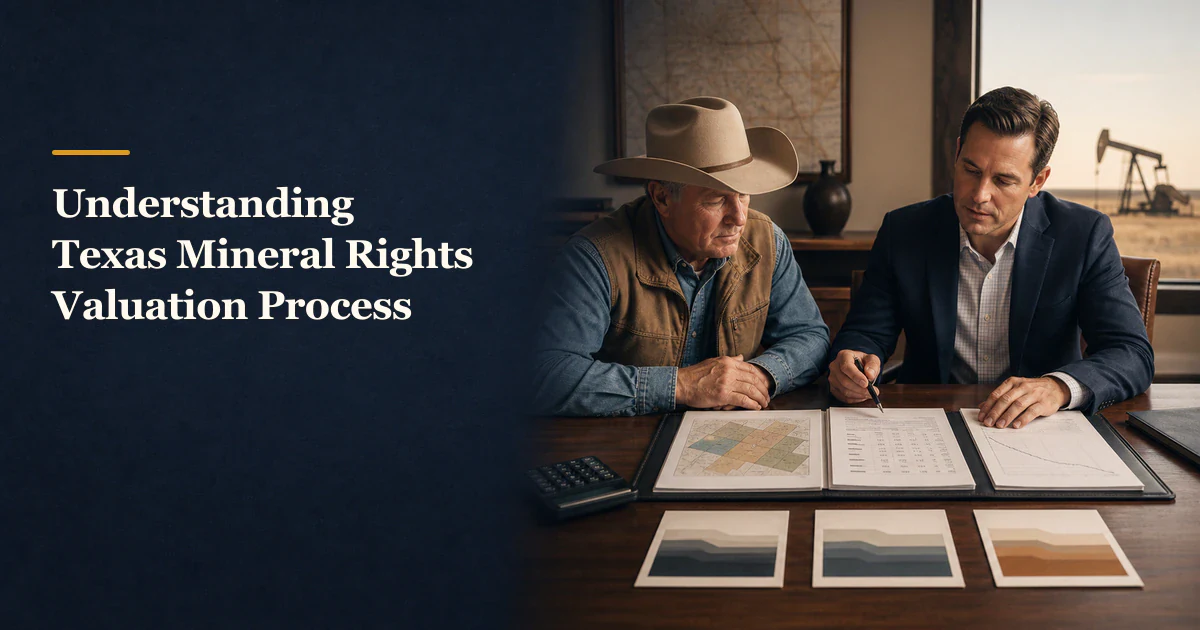
A useful Texas mineral-rights valuation is a dated, traceable process, not an unexplained number detached from the property, evidence, assumptions, and intended decision.

A fair valuation is not proved by one impressive number. Test whether the same evidence rules work in both favorable and unfavorable directions.

A Texas mineral-rights transaction becomes easier to control when each question is matched to the evidence source that can answer it and its limits are recorded.

MRX currently describes its assessment as free and no-obligation. Verify exactly where that promise starts and stops before submitting.

A seller avoids preventable problems by advancing only when the current stage has a named output, supported evidence, and no unresolved stop condition.

The useful meaning of “near me” is a review tied to the mineral property’s jurisdiction, records, formation, and purpose, not simply the reviewer’s driving distance from the owner.

A pre-review cost map helps an owner distinguish the free MRX review from outside services, later transaction deductions, tax questions, and price adjustments.

Five preventable process mistakes can leave an owner comparing the wrong asset, relying on incomplete evidence, or reaching closing without the needed controls.

A new mineral owner needs a controlled record before a conclusion: identify the possible interest, preserve source documents, connect operational evidence, and label what remains unknown.

The hardest mineral-sale traps are often quiet terms that change meaning when a definition, exhibit, deadline, adjustment, or closing instruction is triggered.

Market demand matters only after you identify which market signal changed, how it connects to the interest, and whether actual buyers confirm it.

A mineral-rights range is shaped by interacting property, cash-flow, development, market, lease, evidence, and transaction inputs, not one headline factor.

A no-obligation review separates valuation evidence from permissions, commitments, buyer terms, and the owner’s later decision.

A repeatable step-by-step workflow for defining the interest, grading evidence, testing scenarios, reconciling terms, and freezing a dated mineral-rights range.
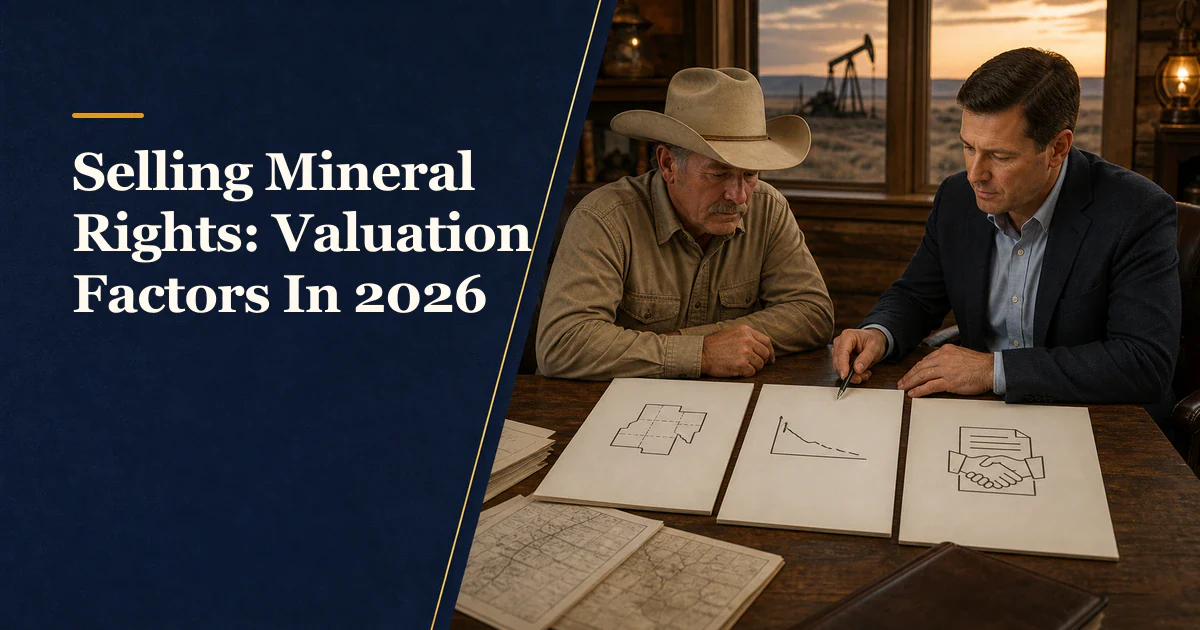
A 2026 seller-facing framework for separating asset facts, forecast assumptions, and transaction terms before comparing mineral-rights value ranges.

A mineral owner can control the sale process by requiring a defined input, decision, output, and stop condition at every transaction handoff.

A 2026 planning framework for dating dependencies, parallel work, decisions, closing handoffs, and timeline resets without relying on a promised duration.

A defensible directional range begins with a defined interest, matched evidence, explicit stop conditions, and assumptions that remain visible through every step.

A 2026 mineral-rights review is only as current as its effective dates, observed-through dates, source updates, correction checks, and assumption vintages.

A no-obligation mineral-rights review should make its price, scope, commercial role, deliverable, information use, communication choices, stopping points, and optional next steps clear before an owner proceeds.

A mineral-rights worth checklist is complete enough for a directional review when the exact interest is scoped, available evidence is organized, assumptions are dated, and unresolved items are visible.

A directional mineral-rights valuation can compare asset options only when its date, scope, scenarios, confidence, and owner-specific decision criteria remain visible.

A lease royalty rate changes the owner revenue share used in a valuation model, but ownership, allocation, lease language, production, price, costs, timing, and risk still control the result.
Try a broader question, choose all topics, or clear the author filter.