Sell mineral rights with the facts in front of you
Selling is one option, not the automatic answer. Start by understanding what you own, what a written offer includes, what changes after a sale, and which assumptions still need verification.
An owner may be able to sell a full or partial mineral interest. Selling converts that interest
into a negotiated payment and transfers the future benefits and risks attached to the portion
conveyed. Holding preserves the interest but leaves future income uncertain. A partial sale can
divide those tradeoffs.
Three paths an owner can compare
Sell the full interest
Transfer the interest described in the deed and agreement. Compare the amount, property
description, depths, effective date, adjustment rights, closing conditions, and payment
terms together.
Clarify first: which exact interest is included and what future rights or
payments would no longer belong to you.
Sell only a portion
Convey a defined fraction or portion and retain the rest. Precision matters because the
deed controls exactly what is sold and what remains with the owner.
Clarify first: whether the written fraction, acreage, formations, and
reservation language match the split you intend.
Hold for now
Keep the interest and any future ownership benefits or risks. Production, commodity
prices, operator decisions, title, and development timing can all change.
Clarify first: which near-term need, uncertainty, or concentration risk
you are trying to manage by waiting.
How the mineral-rights selling process works
Identify the interest. Confirm the state, county, legal description,
ownership documents, lease, division order, operator, and recent payment information
available.
Understand the value factors. Review production history, ownership decimal,
lease economics, nearby activity, title confidence, market conditions, and assumptions about
future development.
Compare written offers. Normalize the property and rights being purchased,
then compare price, adjustments, diligence, funding, timing, and post-closing obligations.
Review the agreement and title findings. Qualified professionals can address
legal, tax, accounting, title, or appraisal questions that fall outside an educational review.
Close and record the transfer. The parties complete the approved documents,
payment conditions, and county recording steps specified by the transaction.
Continue with the guide that matches your decision
These guides answer different questions. Use the narrowest one that matches the decision or
record in front of you rather than treating every mineral-rights question as a price question.
Selling-process guides
Use these when the immediate question is what happens next and what can change the schedule.
Inventory the ownership, payment, production, offer, and correspondence records already
available, then identify missing items without treating the index as proof of title.
Related offer-review guides
These cross-pillar resources support a selling decision, but their canonical topic owner is
the mineral-rights offer-review pillar because they focus on the
buyer’s written terms and transaction risks.
Review pressure tactics, incomplete terms, scope ambiguity, adjustment rights, and
payment conditions before relying on a headline amount.
What an MRX review does and where it stops
The review organizes
The facts and documents available
A directional range and the assumptions used
Written-offer terms that deserve comparison
Open questions for the buyer or a qualified professional
The review does not provide
Not a certified appraisal, formal valuation report, or fairness opinion
Legal, tax, title, accounting, engineering, reserve, or investment advice
A guarantee of market value, sale price, title, or future production
An obligation to sell to anyone
MRX is for educational purposes only and is not a buyer. The full website
disclosure remains available in the footer.
Published by the MRX Editorial Team. Reviewed
September 13, 2026 under the MRX source, editorial, and compliance process.
Frequently asked questions about selling mineral rights
Can I sell only part of my mineral rights?
A mineral owner may be able to sell a fractional interest or a defined portion while retaining the balance. The deed and purchase agreement control what transfers, so the exact legal description and reservation language should be reviewed by a qualified attorney in the state where the interest is located.
What information helps when comparing a mineral-rights offer?
Useful starting information includes the written offer, mineral deed or inheritance records, lease and division order, recent royalty statements, legal description, operator information, and public production records. Missing documents are common and can be identified during intake.
How long can a mineral-rights sale take?
Timing depends on title complexity, the buyer’s diligence process, document availability, agreement terms, and closing requirements. A clean ownership record may move faster than an interest involving multiple heirs, curative documents, or disputed acreage.
Should I accept the highest mineral-rights offer?
The headline amount is only one part of an offer. Owners can also compare the property description, depths conveyed, effective date, price-adjustment rights, closing conditions, payment timing, representations, and post-closing obligations.
How is MRX involved if I decide to sell?
MRX begins with an educational, directional review. There is no obligation to sell. MRX is for educational purposes only and is not a buyer.
A practical document checklist for Texas mineral rights owners preparing for an underwriter review or a sale. Plain-language, with the assumptions stated.
How a Texas mineral rights sale actually works, from first contact to closing. A step-by-step read with the assumptions stated and the documents named.
An evidence-cutoff log records the sources, identifiers, covered periods, access dates, last-included evidence dates, and gaps present in a review file at one stated point in time.
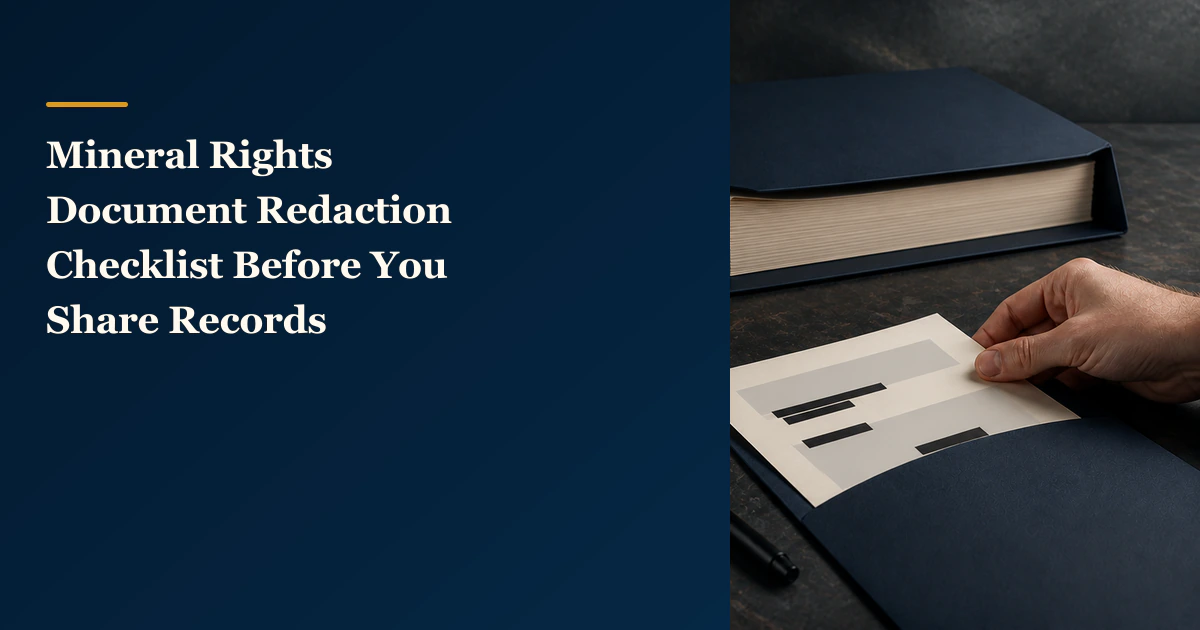
A mineral-rights document redaction checklist separates preserved originals from limited share copies and records what was withheld without recording the sensitive value.
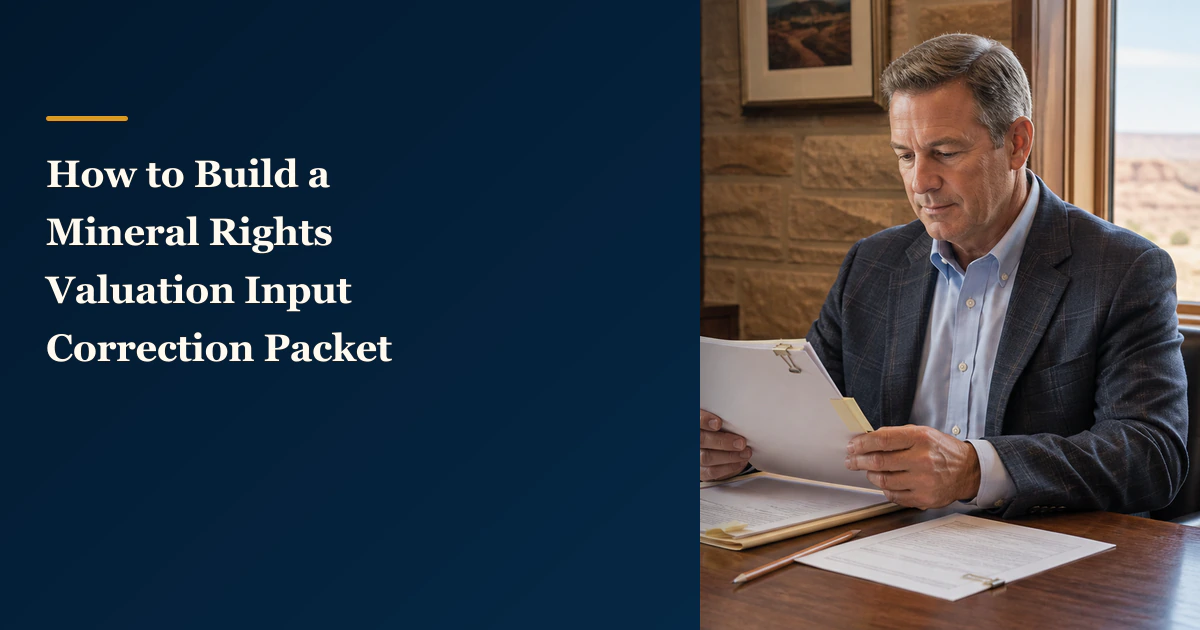
A mineral rights valuation input correction packet records a factual correction request and its source without recalculating value or implying a changed conclusion.
A mineral rights offer correspondence index records the identity and relationship of written messages and attachments without interpreting the offer or prescribing a response.
A property-scope crosswalk puts the tract and interest descriptions from separate mineral-rights documents side by side before anyone compares price or terms.
A family point person can keep mineral-rights inquiries orderly by receiving, preserving, acknowledging, and routing messages without deciding, negotiating, or signing for anyone.
A structured family conversation can surface goals, concerns, known facts, and unanswered questions before anyone decides whether to assess or sell mineral rights.
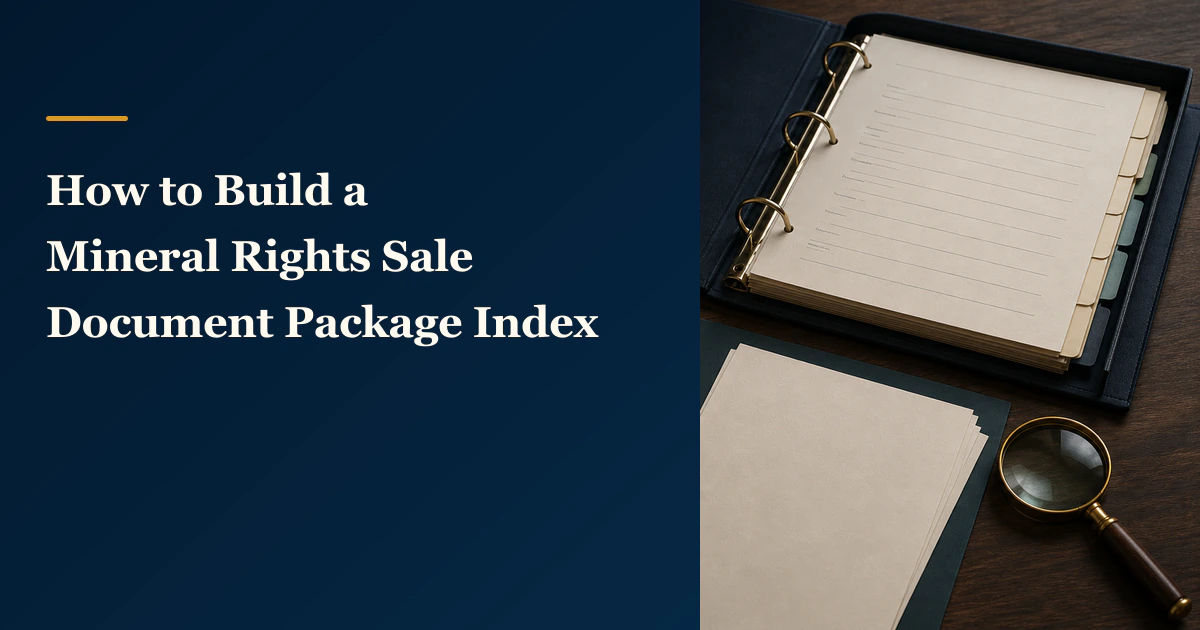
A mineral-rights sale document package index reconciles every source file, page, exhibit, schedule, addendum, signature copy, and replacement without interpreting the documents.
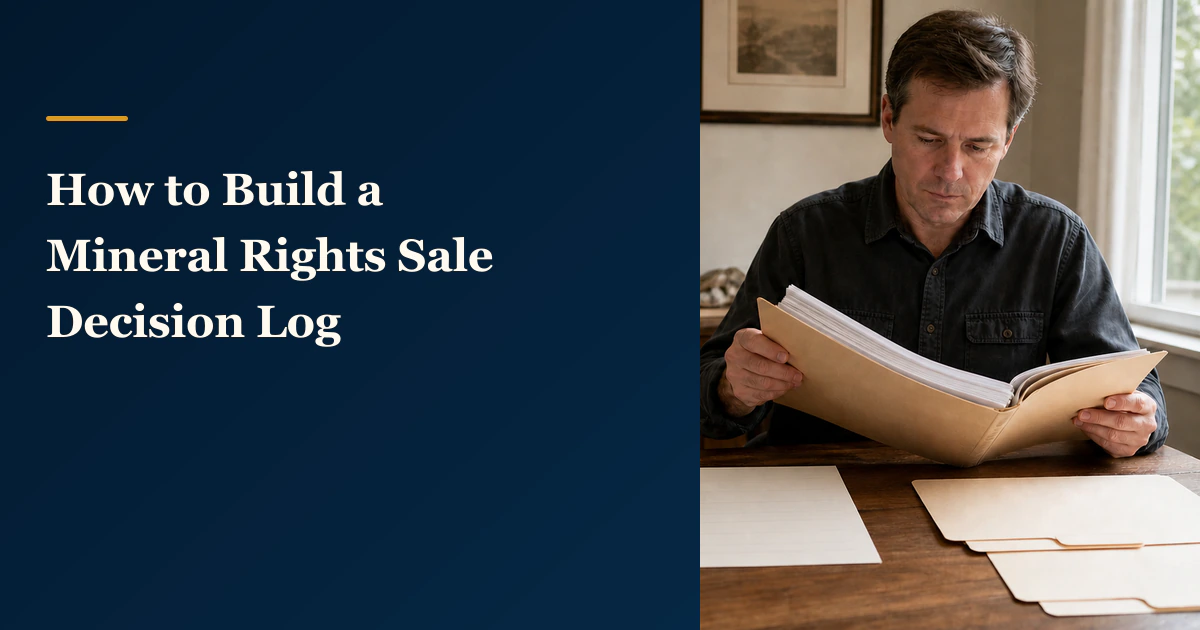
A mineral-rights sale decision log keeps scope changes, source records, document versions, open questions, referrals, decisions, and next actions in one dated audit trail.