Preserve one county index attempt with the exact name variant, search role, date range, displayed locator, bounded result, evidence reference, and next step.
An evidence-cutoff log records the sources, identifiers, covered periods, access dates, last-included evidence dates, and gaps present in a review file at one stated point in time.
A mineral-rights document redaction checklist separates preserved originals from limited share copies and records what was withheld without recording the sensitive value.
A mineral rights offer correspondence index records the identity and relationship of written messages and attachments without interpreting the offer or prescribing a response.
A property-scope crosswalk puts the tract and interest descriptions from separate mineral-rights documents side by side before anyone compares price or terms.
A family point person can keep mineral-rights inquiries orderly by receiving, preserving, acknowledging, and routing messages without deciding, negotiating, or signing for anyone.
A structured family conversation can surface goals, concerns, known facts, and unanswered questions before anyone decides whether to assess or sell mineral rights.
A mineral-rights sale document package index reconciles every source file, page, exhibit, schedule, addendum, signature copy, and replacement without interpreting the documents.
A mineral-rights sale decision log keeps scope changes, source records, document versions, open questions, referrals, decisions, and next actions in one dated audit trail.
There is no universal sell-or-keep answer. Compare the exact rights, current royalty evidence, uncertainty, complete sale terms, owner purpose, alternatives, and unresolved professional questions.
A mineral-rights sale problem needs stage-based triage: preserve the exact record, identify what has and has not happened, stop unsafe changes, and route the specific issue without assuming a remedy.
A useful mineral-rights review begins with a scoped question and a property-matched record inventory, not a perfect file or an unsupported ownership, value, or legal conclusion.
Book the current MRX phone review by confirming your timezone, choosing a live slot, providing appointment details, making separate communication choices, and waiting for the on-screen booked state.
A Texas mineral-rights transaction becomes easier to control when each question is matched to the evidence source that can answer it and its limits are recorded.
A seller avoids preventable problems by advancing only when the current stage has a named output, supported evidence, and no unresolved stop condition.
A pre-review cost map helps an owner distinguish the free MRX review from outside services, later transaction deductions, tax questions, and price adjustments.
Five preventable process mistakes can leave an owner comparing the wrong asset, relying on incomplete evidence, or reaching closing without the needed controls.
The hardest mineral-sale traps are often quiet terms that change meaning when a definition, exhibit, deadline, adjustment, or closing instruction is triggered.
A 2026 planning framework for dating dependencies, parallel work, decisions, closing handoffs, and timeline resets without relying on a promised duration.
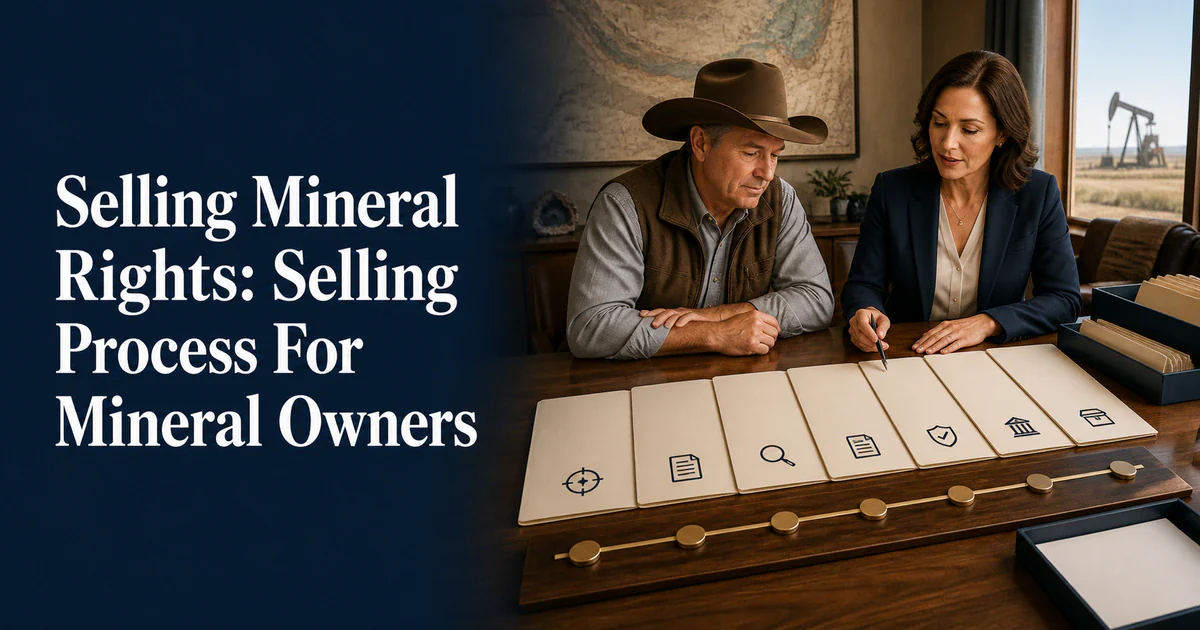
How a Texas mineral rights sale actually works, from first contact to closing. A step-by-step read with the assumptions stated and the documents named.