
MRX Learning Center
What Is a Held-by-Production Lease and How Does It Affect Your Mineral Rights?
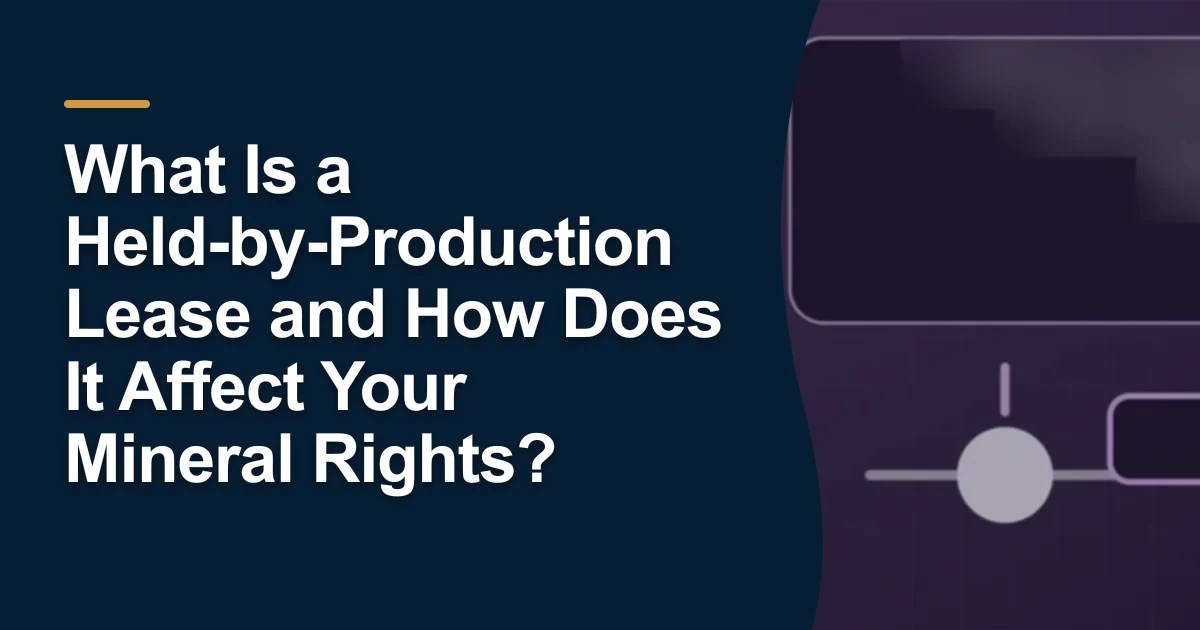
Held by production describes a lease continuing beyond its primary term under the lease’s secondary-term language; the exact instrument controls.
Direct answer for mineral owners
Held by production generally describes an oil and gas lease continuing after its primary term because the lease’s secondary-term conditions are satisfied. Production may be central, but savings clauses, pooling, operations, acreage and depth releases, amendments, and applicable law can affect the result. Public data is context, not a lease-status determination.
Key takeaways for mineral owners
- Held by production concerns continuation after the primary term; it is not a separate ownership type.
- The exact lease and recorded amendments control the analysis.
- Savings, pooling, continuous-development, retained-acreage, and depth clauses may affect different parts of the premises.
- Public production records cannot by themselves prove that a private lease is active or expired.
This article is educational and is not legal advice, tax advice, a title opinion, or a certified appraisal. A qualified professional should review owner-specific legal, tax, title, or certified-valuation questions.
Direct answer for mineral owners
A lease is commonly called held by production, or HBP, when it continues beyond its primary term because the lease’s secondary-term conditions are satisfied. Production is often central, but the phrase does not decide which wells, acreage, depths, or formations remain leased.The exact lease, addenda, amendments, pooled-unit instruments, releases, operations facts, and applicable law control. Public production data can help frame questions; it cannot establish that a private lease is active or expired.
Place HBP on the lease timeline
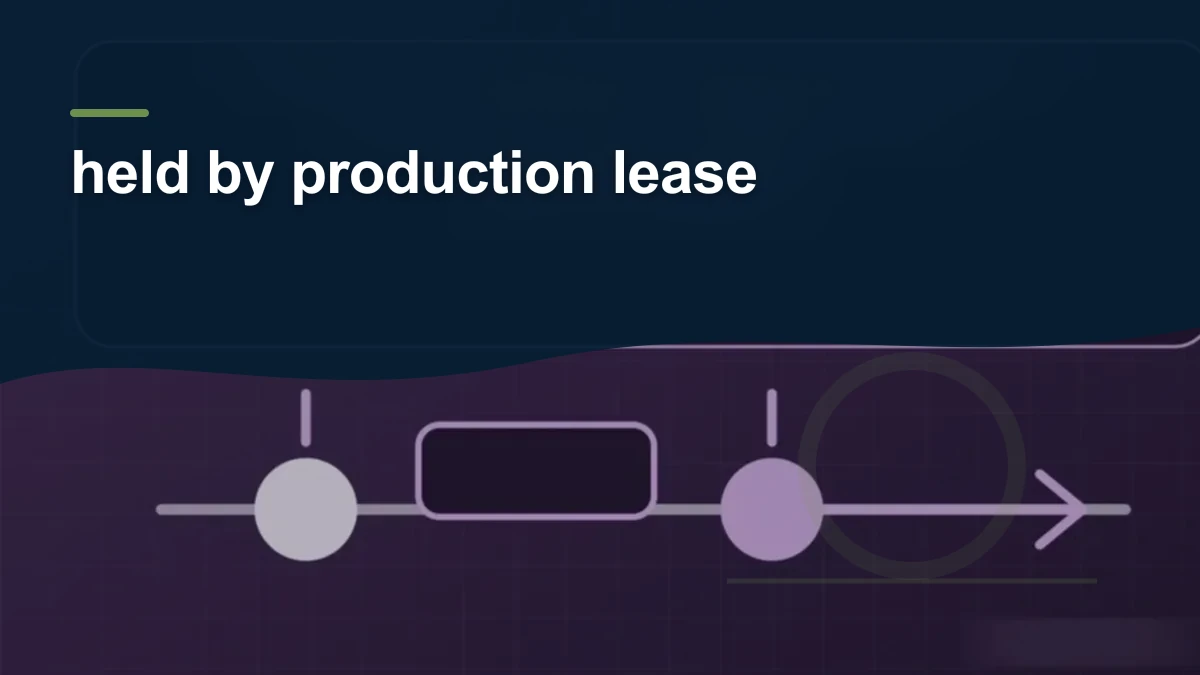
An oil and gas lease commonly has two broad periods:
- Primary term: the initial stated term, during which the lessee may maintain the lease in the ways the contract permits.
- Secondary term: the period after the primary term, when continuation depends on the habendum clause and any applicable savings or operations provisions.
Read the complete oil and gas lease anatomy guide before isolating one HBP phrase. Definitions and clauses elsewhere in the document may change how the secondary term works.
Identify the continuation language
Start with the habendum clause, then trace every referenced definition and exception. Organize provisions addressing:
- production;
- commencement or continuation of operations;
- temporary cessation;
- shut-in wells and payments;
- force majeure;
- pooling and unit participation;
- continuous drilling or development;
- retained acreage;
- depth or formation release;
- delay rentals; and
- partial releases or surrender.
A recorded amendment, ratification, or unit designation can matter as much as the original lease. A memorandum may not contain every operative term.
Separate production evidence from a legal conclusion
The Railroad Commission production-data system reports operator-submitted production. Owners can use it to identify leases, wells, operators, products, and reporting periods for further investigation.
The Commission’s Production Data Query FAQs describe system limitations and correction issues. A public query may not show:
- the lease’s complete contractual definition of production;
- whether production is allocated from a pooled unit;
- operations during a reporting gap;
- a shut-in condition or payment;
- acreage or depth released by another provision;
- an unrecorded operational fact; or
- the legal effect of the evidence.
Treat the data as one record in a larger file, not a status certificate.
Determine the geographic and vertical scope
Even if a lease continues somewhere, it may not necessarily continue everywhere originally described. Review pooled-unit designations, allocation descriptions, retained-acreage provisions, Pugh clauses, depth severance, continuous-development schedules, and recorded releases.
Build a tract-by-depth table:
- Covered tract: locate the lease legal description and exhibits.
- Acreage assigned to a unit: locate recorded unit designations and amendments.
- Well or lease reporting production: locate Railroad Commission identifiers and operator records.
- Retained depths or formations: locate depth clauses, releases, and well information.
- Possible extension event: locate the habendum and savings clauses.
- Possible release event: locate retained-acreage, Pugh, development, or surrender language.
The table organizes the inquiry; it does not decide the legal outcome.
Recognize state-lease examples as examples
The Texas General Land Office lease-maintenance resources discuss items such as delay rentals, shut-in payments, force majeure, and division orders for state-administered leases. Those materials show why lease maintenance requires multiple records, but state forms and procedures should not be treated as terms of a private lease.
What to do before relying on HBP status
Gather the complete recorded and contractual history. Reconcile it with production and operations records. If lease status matters to a sale, new lease, demand, or litigation decision, obtain qualified Texas oil-and-gas counsel or appropriate title review.
MRX can organize the record and provide a directional offer or document review, but it does not decide lease validity, issue a title opinion, or provide legal conclusions. MRX provides educational information and resources only and does not buy mineral rights. A separate adviser is appropriate when the owner wants an independent opinion.
Source notes and research limitations
- GLO lease-maintenance resources support only the state-lease examples and record categories identified above.
- Railroad Commission production data supports the operator-reported production context.
- The Production Data Query FAQs support the stated data limitations.
Next, review the complete oil and gas lease guide, understand what division orders do, or request a document review.
Frequently asked questions
Does any production automatically hold the entire leased premises?
Not necessarily. The lease, pooled-unit documents, retained-acreage or depth clauses, amendments, and applicable law may affect which acreage or formations continue.
Does a temporary production gap terminate a lease?
A gap alone does not answer the question. Cessation, continuous-operations, shut-in, force-majeure, and other clauses may be relevant, and the facts require qualified review.
Can a shut-in payment keep a lease in effect?
Some leases contain shut-in provisions, but their conditions, timing, covered wells, and legal effect depend on the exact language and facts.
Can Railroad Commission data prove lease expiration?
No. It provides operator-reported production context and has reporting limitations. Lease status is a contract, title, fact, and law question.
What records should I gather for an HBP review?
Gather the signed lease, addenda, amendments, pooled-unit records, releases, production history, shut-in or rental records, operations evidence, division orders, and relevant correspondence.
Sources reviewed for this article
Related mineral-rights articles

What Is an Oil and Gas Lease and How Does It Affect Your Mineral Rights?
An oil and gas lease grants development rights under negotiated terms; it does not ordinarily transfer the owner’s entire mineral estate.
Read the post →
What Is a Division Order and Why Does It Matter for Mineral Rights Owners?
A division order tells a payor how to distribute production proceeds; owners should verify the property, payee, decimal, and added terms before signing.
Read the post →
Net Mineral Acres vs. Royalty Acres: What Texas Mineral Rights Owners Need to Know
Net mineral acres describe fractional mineral ownership; royalty acres are an economic shorthand whose definition must be confirmed before comparison.
Read the post →
Can Louisiana OMR Records Prove My Private Mineral Lease?
A state mineral-lease file is a different record source from a private owner’s parish-record question. Keep the actual instrument and source locator separate from a title conclusion.
Read the post →A practical next step
Put your mineral rights in context.
Every mineral interest, royalty history, and written offer is different. Start with a question, or share what you have for a free underwriter review.
- Free
- Confidential
- No obligation to sell
Ready for a closer look?
Request a Document ReviewGet a directional range with the assumptions clearly stated.