
MRX Learning Center
Understanding Our Transparent Approach to Mineral Rights Reviews Versus Traditional Selling Tactics
A process-transparency article that frames MRX review as educational and inspectable, not as a superiority promise or appraisal claim.
Direct answer for mineral owners
A transparent mineral-rights review explains what records, assumptions, and limits are in play before an owner makes a decision. That differs from pressure-based selling tactics because the goal is to clarify the file, the offer terms, and the open questions rather than to force a fast conclusion or imply a guaranteed market truth.
Key takeaways for mineral owners
- Transparency is about visible assumptions, not about claiming to know the one true number in advance.
- MRX first-party process language can describe review inputs, but it should not be stretched into superiority or guarantee claims.
- Traditional pressure tactics are easier to recognize by deadlines, opaque math, and post-signing adjustments than by labels alone.
- Owners benefit when the process creates better questions before any decision is made.
Educational process article only. MRX review language here is directional and first-party-sourced; it is not a superiority claim, legal guidance, tax guidance, or a formal valuation report.
Direct answer for mineral owners
A transparent mineral-rights review explains what records, assumptions, and limits are in play before an owner makes a decision. That differs from pressure-based selling tactics because the goal is to clarify the file, the offer terms, and the open questions rather than to force a fast conclusion or imply a guaranteed market truth.What transparent review means here
In this context, transparency means the owner can inspect the file: what production or royalty history was considered, what offer terms are being compared, what title or acreage assumptions were used, and what still needs verification. That keeps the process educational. It tells the owner how the review was framed without pretending that a directional review is the same thing as a legal opinion or a formal valuation report.
How that differs from pressure-first selling tactics
Pressure-based tactics often move in the other direction. They emphasize speed, certainty, or a narrow deadline before the owner has had time to inspect the assumptions. The problem is not only tone. It is the loss of review quality when the process becomes harder to question. That is why written terms, title assumptions, and adjustment language matter just as much as the opening number.
What MRX can say without crossing the evidence boundary
MRX first-party pages support a directional description of the review inputs: production history, royalty income, offer terms, operator and basin context, and title or acreage confidence. Those sources also support a boundary statement that the review is not a formal valuation report, legal opinion, or tax opinion. Owners who want a parallel methodology explainer can also read Understanding Our Valuation Methodology: Ensuring Fairness and Accuracy in Your Mineral Rights Review and the broader methodology hub.
What a good process gives the owner
The right outcome from a transparent review is not blind confidence. It is a clearer set of records, assumptions, written terms, and next questions so the owner can decide with less ambiguity and less pressure.
Questions this article helps you frame
- What makes a mineral-rights review process transparent?
- How does a transparent review differ from pressure-based selling tactics?
- What boundaries should MRX process language respect?
Source notes and retrieval context
- MRX: How It Works (retrieved 2026-07-31; verified 200)
- MRX organization profile boundary statement (retrieved 2026-07-31; verified 200)
- Texas Railroad Commission: Oil & Gas Production Data (retrieved 2026-07-31; verified 200)
- County clerk ownership records remain a required source-of-record class for tract-specific title verification even though this statewide article does not fabricate one county URL for every property.
- Retrieval window used for this remediation packet: 2026-07-31T23:07:24Z. Verified source statuses were carried forward from the Wave 2 primary-source packet.
For broader context, visit the hub page, continue to the sibling article, or book a review when you want help organizing your records and next questions.
Frequently asked questions
What does a transparent review process actually show the owner?
It should show the owner which records were used, what assumptions are provisional, what written terms matter, and what still needs verification before a decision.
Does a transparent review mean the result is guaranteed?
No. Transparency helps the owner inspect the reasoning, but it does not turn an educational review into a guarantee, a title opinion, or a formal valuation report.
Why do traditional pressure tactics create risk?
Because urgency, opaque math, and late changes can push an owner toward a decision before the file, assumptions, and written terms have been reviewed carefully.
Can MRX describe its process without making superiority claims?
Yes. It can describe the review inputs and educational boundaries supported by first-party process pages without claiming that every owner will receive the best outcome or one universal market truth.
What is the owner’s best use of a transparent review?
Use it to organize records, understand assumptions, pressure-test written terms, and identify which questions belong with a lawyer, tax professional, or title specialist.
Sources reviewed for this article
Related mineral-rights articles
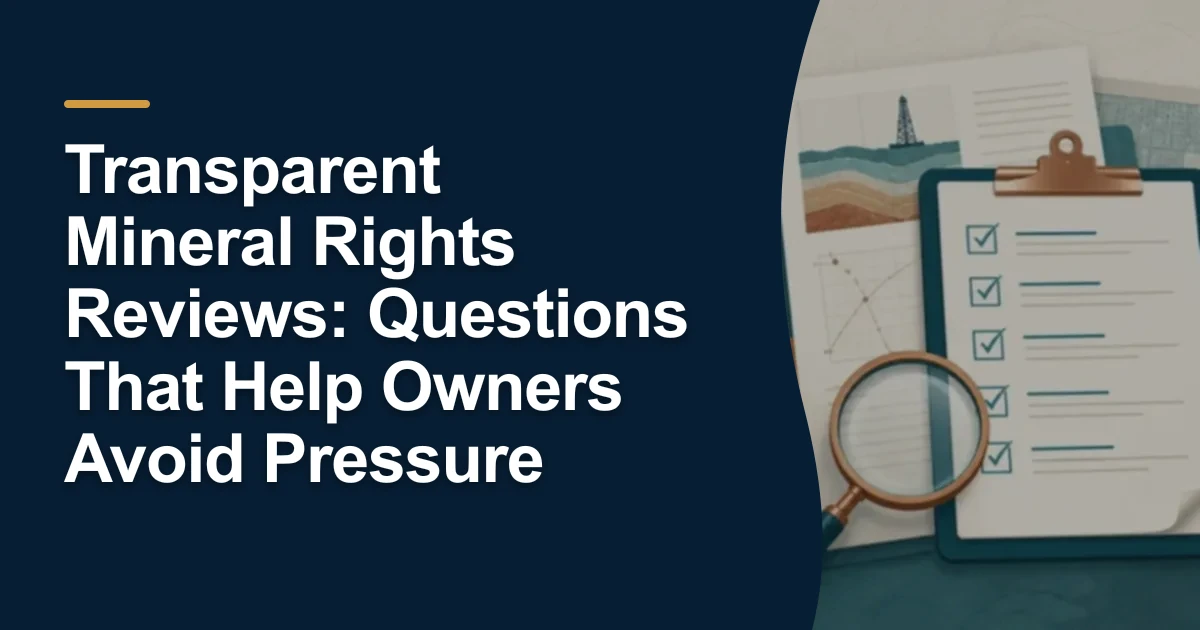
Transparent Mineral Rights Reviews: Questions That Help Owners Avoid Pressure
A source-bounded MRX process article about transparent reviews, owner questions, written terms, and no-obligation decision control.
Read the post →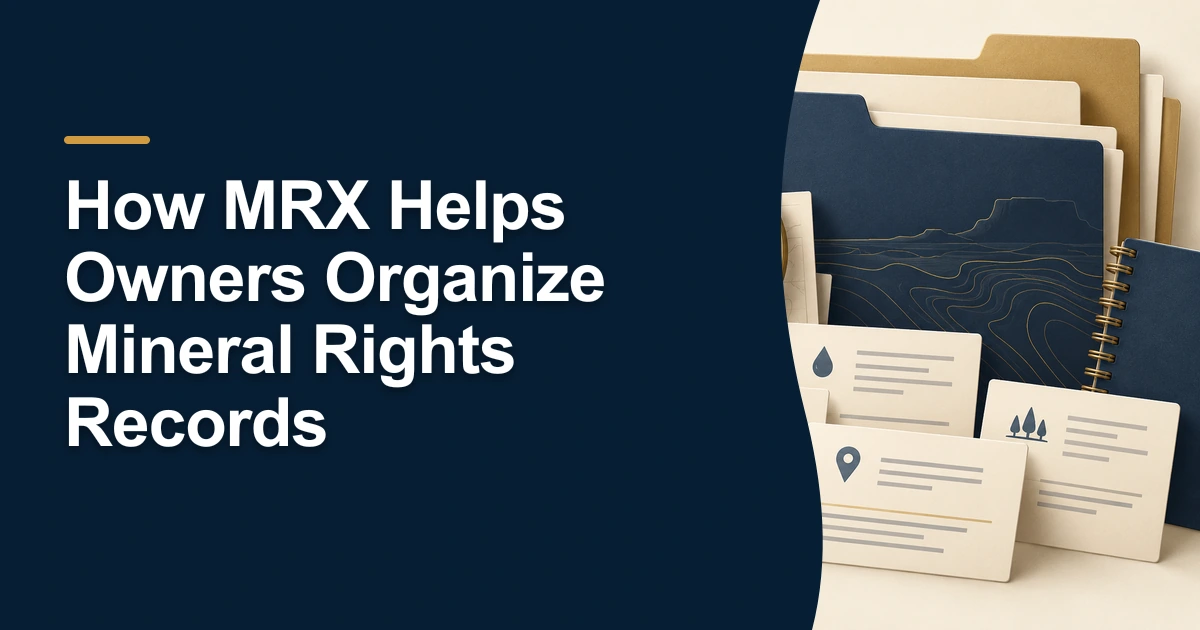
How MRX Helps Owners Organize Mineral Rights Records
A source-bounded overview of the no-obligation review, stated assumptions, document review, and professional boundaries MRX describes on its public pages.
Read the post →
Why Owners Start With an MRX Educational Review
A neutral MRX process article about using a no-obligation review as an organized first step before a mineral-rights decision.
Read the post →
How to Compare Mineral Rights Review Services Transparently
A neutral comparison checklist for mineral-rights review services based on process transparency, not competitor-performance claims.
Read the post →A practical next step
Put your mineral rights in context.
Every mineral interest, royalty history, and written offer is different. Start with a question, or share what you have for a free underwriter review.
- Free
- Confidential
- No obligation to sell
Ready for a closer look?
Talk With the MRX TeamGet a directional range with the assumptions clearly stated.